Small Campers With Bathrooms: What You Gain and What You Give Up
A toilet and shower in a trailer you can tow with a family car sounds ideal. It often is, provided you understand the trade in space and weight.

Ask people what stops them from camping more often and the answer is frequently the bathroom. A walk across a dark campground at two in the morning has ended many camping careers.
Small campers with their own bathrooms promise to solve that without the bulk of a full-size RV. They do, with compromises worth understanding before you buy or rent.
What counts as small
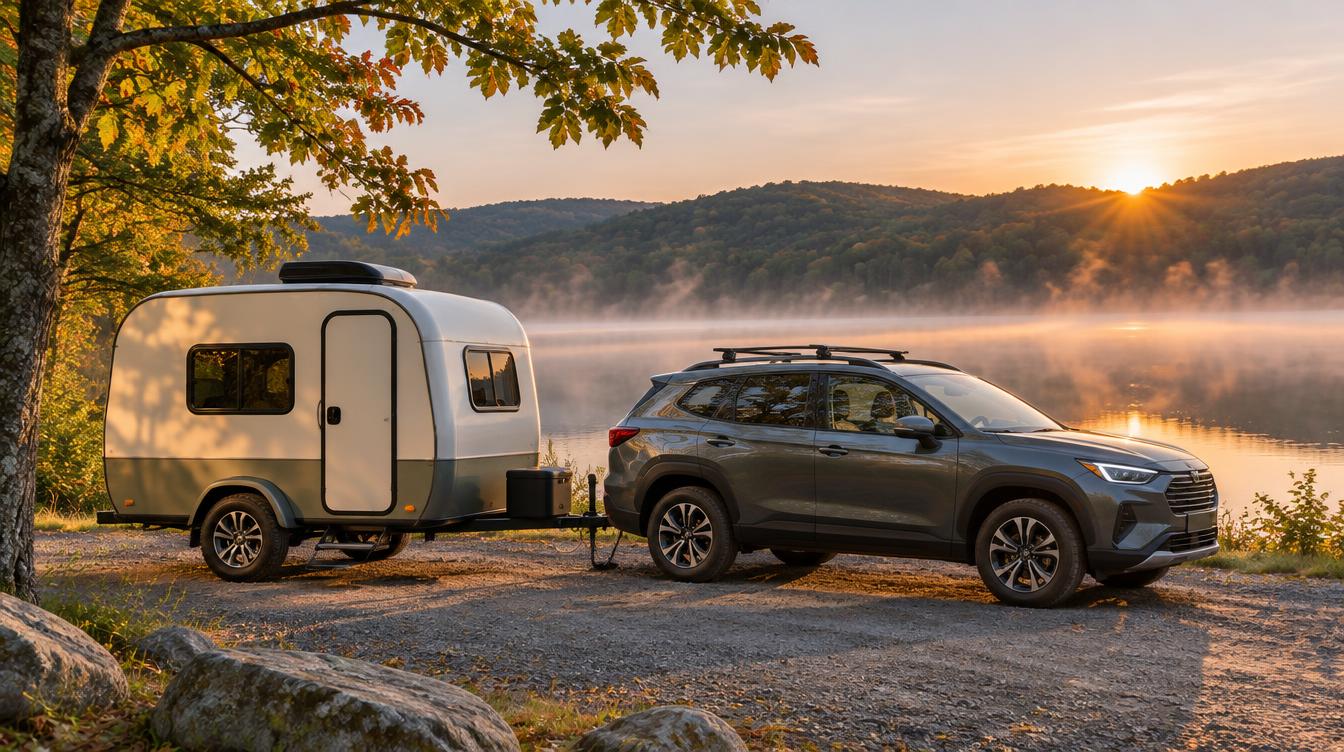
For this guide, small means a towable trailer under about 20 feet, or a camper van. These are the sizes that fit in a normal driveway and can be towed by many SUVs and some larger cars.
Within that length, fitting a bathroom means taking space from something else: usually the bed, the kitchen or storage.
Wet bath or dry bath
A wet bath combines toilet and shower in a single waterproof compartment. The whole room gets wet when you shower, and the toilet sits in the shower tray. It takes very little floor space.
A dry bath separates the shower from the toilet, as at home. It is more comfortable and needs considerably more room, which is why it appears mainly in trailers of 18 feet and above.
| Type | Space needed | Comfort | Common in |
|---|---|---|---|
| Wet bath | Very little | Functional | Camper vans, trailers of 13 to 17 ft |
| Dry bath | A full corner | Close to home | Trailers of 18 ft and longer |
| Toilet only | Minimal | Basic | Teardrops and micro campers |
Three kinds of toilet
The type of toilet shapes how you camp more than the layout does.
- Flush toilet with black tank: feels like home, and needs emptying at a dump station.
- Cassette toilet: has a small removable tank you carry to any ordinary toilet.
- Composting or dry toilet: uses no water and no tank, with its own routine.
Cassette toilets are popular in small campers because they free you from needing a dump station at all.
In a small camper, the bathroom is less about luxury than about not needing a torch at 2 a.m.
Weight is the real constraint
A bathroom adds more than fixtures. It adds water tanks, a water heater, a pump and plumbing. Water itself weighs a little over eight pounds a gallon.
A 30-gallon fresh tank adds around 250 pounds when full, before you count the waste tanks. That matters when you are towing with a mid-size vehicle.
Read the right number
Brochures lead with dry weight, which is the trailer empty. The figure that matters is the gross vehicle weight rating, the maximum it may weigh when loaded.
Compare that rating with your vehicle's towing capacity, and leave a comfortable margin. Check your vehicle's payload too, because the weight pressing down on the hitch counts against it, along with passengers and luggage.
If the numbers are close, they are too close. Hills, headwinds and long descents all make a marginal combination tiring to drive.
What you give up
In a 16-foot trailer, a bathroom may occupy the space where a permanent bed or a dinette would otherwise go. You may find yourself converting the table into a bed every night.
Storage shrinks as well. Wardrobes, the pantry and outside lockers all compete with tanks and plumbing for the same few cubic feet.
The upkeep
Plumbing brings maintenance. Tanks need emptying and rinsing, seals need occasional attention and the whole system must be drained or protected with antifreeze before the first frost.
None of it is difficult. It is simply a set of chores that a camper without a bathroom does not have.
The camper van option
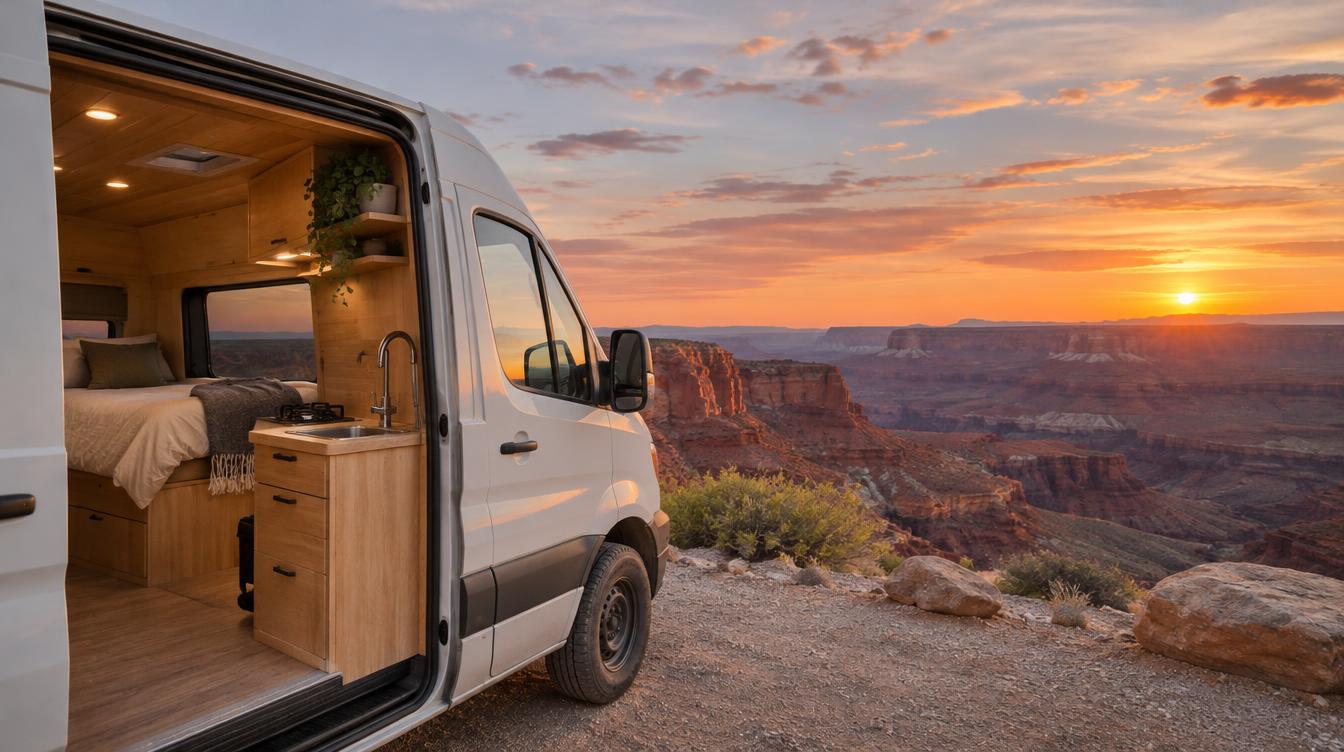
Class B camper vans often fit a wet bath into a vehicle under 21 feet. They are the easiest of all to drive and park, and the most expensive for the space you get.
They suit couples who move every day or two. Families and people who stay put for a week usually prefer a trailer, which can be left at the site while the car goes exploring.
Questions to ask at the dealer
Stand in the shower with the door closed. Sit on the toilet. Lie on the bed at full stretch. These three tests remove a surprising number of candidates.
Then ask for the tank capacities, the loaded weight rating and the hitch weight, and check them against your tow vehicle's handbook, not the salesperson's memory.
How long between fill-ups
Small tanks limit how long you can camp without services. As a rough guide, two careful people can make 20 to 30 gallons of fresh water last three or four days, with short showers.
If you mostly stay at campgrounds with hookups, tank size matters much less.
Who it suits
A small camper with a bathroom suits couples and small families who value convenience over floor space and who want to tow with the vehicle they already own.
If you camp mainly at sites with good facilities, a simpler and lighter trailer may serve you better. If you camp wherever the road ends, that little bathroom might be the best square yard you ever paid for.