Renting an RV for the First Time: Classes, Costs and Rookie Mistakes
An RV holiday promises freedom and delivers it, once you understand the vehicle, the fees and the campsite. A plain guide for the first trip.

The idea is irresistible: a kitchen, a bed and a bathroom that follow you down the road, with a new view through the windscreen every morning. Renting an RV is the simplest way to try it without buying one.
It is also unlike renting a car. The vehicle is bigger, the pricing has more parts and the campsite has its own vocabulary. A little preparation makes the first trip far more relaxing.
The three motorhome classes
Motorhomes are grouped into classes by how they are built. The letters are not in size order, which confuses everyone at first.
Class A motorhomes are the large, bus-shaped ones. They offer the most living space and are the most demanding to drive and park.
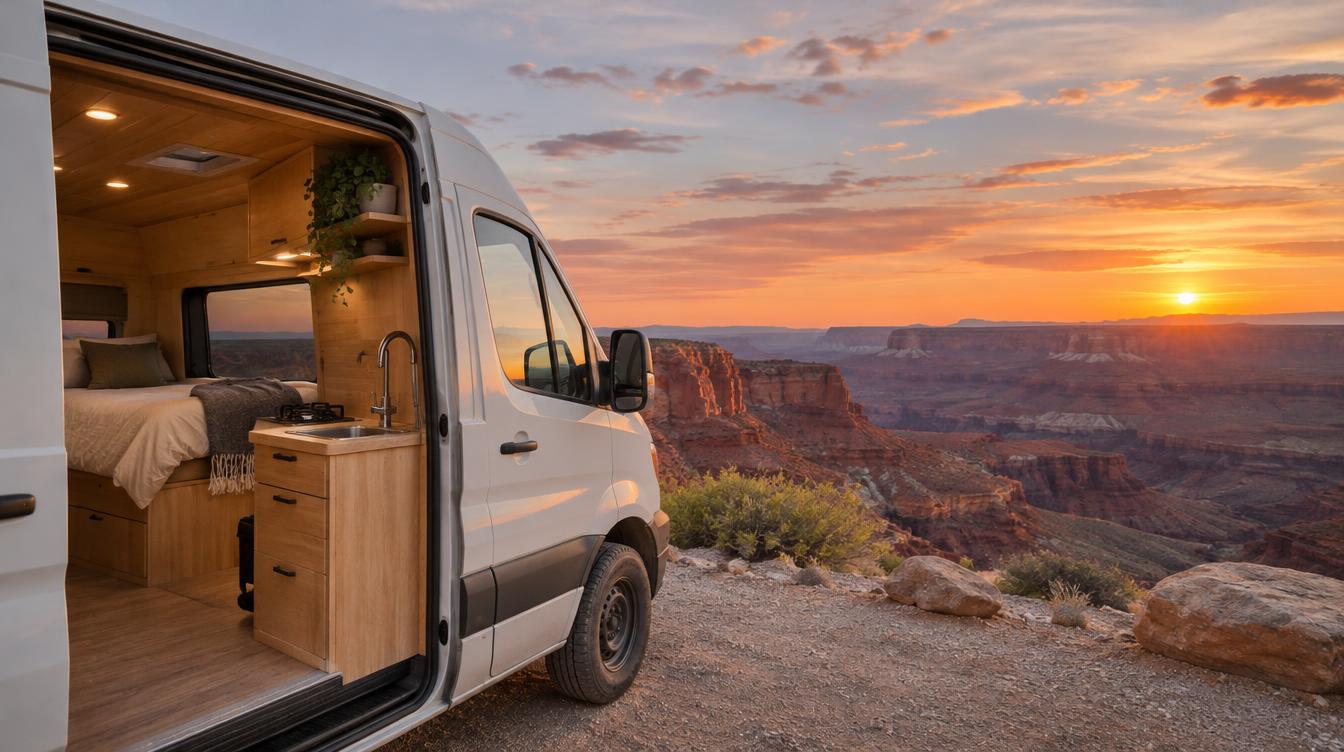
Class B motorhomes are camper vans. They drive much like a large car and fit in a normal parking space, at the cost of a very compact interior.
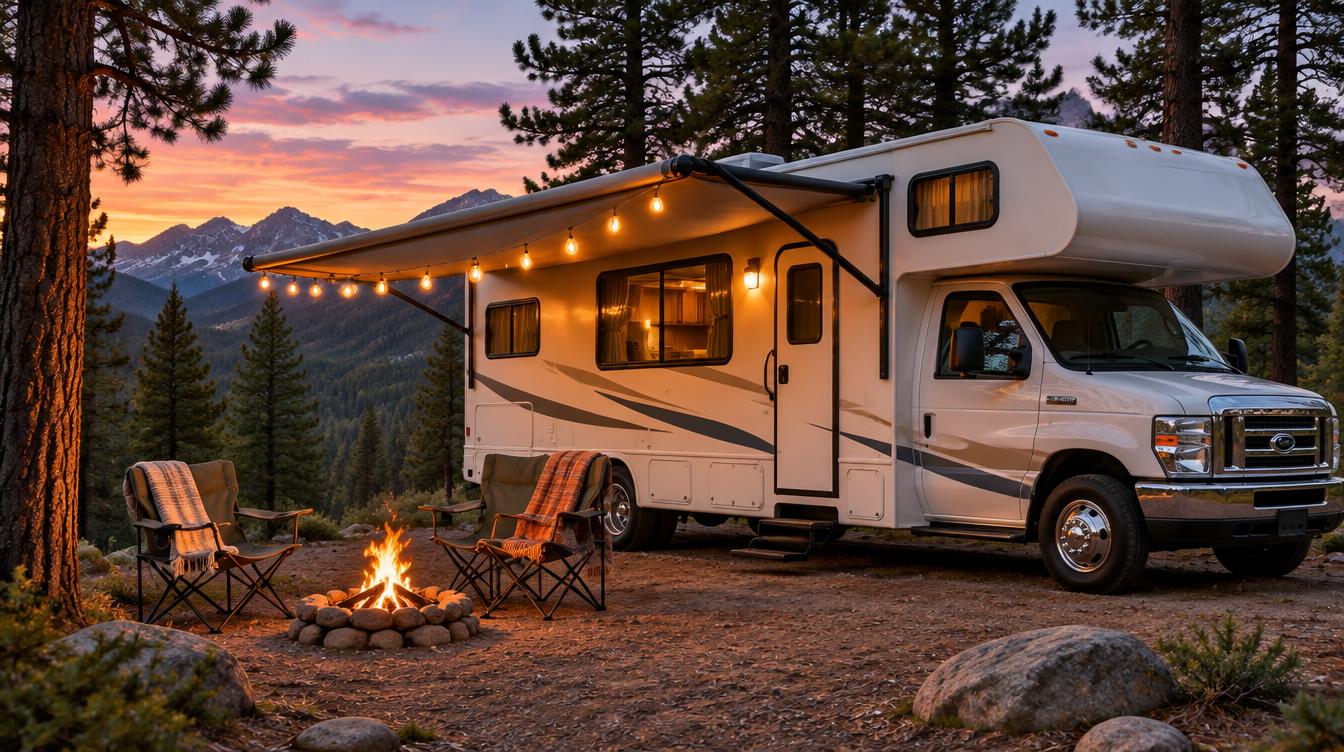
Class C motorhomes sit in between, built on a van or truck chassis with a sleeping area over the cab. They are the most common rental and the usual recommendation for a first trip.
| Class | Typical length | Sleeps | Driving feel |
|---|---|---|---|
| Class B camper van | 17 to 23 ft | 2, sometimes 4 | Like a large van |
| Class C | 20 to 33 ft | 4 to 8 | Like a moving truck |
| Class A | 26 to 45 ft | 4 to 8 | Like a bus |
Choosing a size
Rent the smallest vehicle your group can sleep in comfortably. Every extra foot makes fuel stops, parking and campsite booking a little harder.
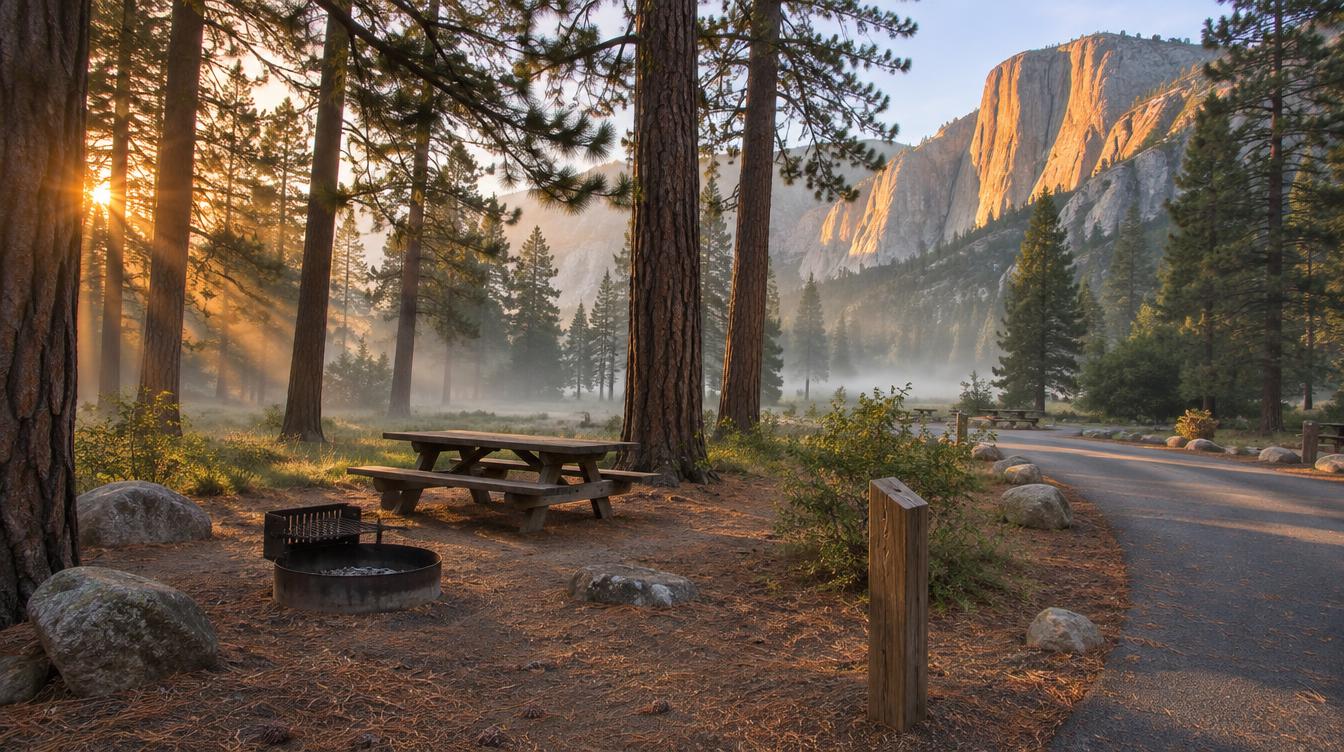
Many national park campgrounds have length limits, and the number of available sites drops sharply for vehicles over about 30 feet. If parks are on your route, check their limits before you choose.
Nobody ever returned an RV wishing it had been longer.
Understanding the price
The nightly rate is only the starting point. Before you compare offers, add up everything else.
- Mileage, often a daily allowance with a per-mile charge beyond it.
- Generator use, sometimes charged by the hour.
- Insurance and a refundable security deposit.
- Preparation, cleaning and tank-emptying fees.
- Kitchen and bedding kits, if not included.
- Campsite fees and fuel, which are entirely yours.
Fuel is the cost people underestimate most. Large motorhomes travel only a few miles on each gallon.
The walk-through matters
Before you leave, the rental company will walk you through the vehicle. Take your time, ask them to demonstrate each system and film it on your phone.
You need to know how to connect electricity and water, how to empty the waste tanks, how to light the water heater and how to operate any slide-outs and the awning. It is much easier to learn in their car park than at a campsite in the dark.
Driving something this large
Most rental motorhomes can be driven on a standard licence in the United States. They do not drive like a car.
Leave far more room to stop. Swing wide on right turns, because the rear wheels cut the corner. Remember that the back of the vehicle swings outward as you turn, which is how fuel pumps and posts get clipped.
Know your height and write it on a note on the dashboard. Low bridges, drive-through canopies and tree branches are the classic first-timer hazards.
Campsites and hookups
Campsites are described by what you can connect to. A full hookup site offers electricity, fresh water and a sewer connection. Partial hookups usually mean electricity and water only.
Electrical supplies come in 30 amp and 50 amp versions. Check which your rental uses and whether an adapter is supplied.
Sites without any hookups are perfectly usable for a night or two. You rely on the fresh water tank, the batteries and, where permitted, the generator.
The tanks
An RV has three tanks: fresh water, grey water from the sinks and shower, and black water from the toilet. Gauges inside show how full each one is.
Emptying them at a dump station is less unpleasant than people fear. Wear gloves, empty the black tank first and then the grey, which rinses the hose. It takes ten minutes.
Book early
Popular campgrounds, especially in national parks, open reservations months in advance and fill quickly for summer. Decide your key stops first and build the route around the sites you can actually get.
Private campgrounds and RV resorts usually have more availability and more facilities, at a higher nightly price.
Common rookie mistakes
Almost every first trip includes at least one of these. Knowing them in advance helps.
- Driving away with the power cable, hose or awning still out.
- Leaving cupboards and the fridge unlatched before setting off.
- Forgetting the vehicle's height at a petrol station canopy.
- Planning too many miles and arriving after dark.
- Running the battery flat without hookups.
A simple departure checklist, read aloud every morning, prevents most of them.
Is it for you?
A week in a rented motorhome will answer that better than any article. Some people return the keys and start shopping for their own. Others decide that a cabin suits them better.
Either way, you will have cooked breakfast with the door open in a place you chose that morning. That is worth trying once.