The Three-Season Tent: How to Choose One You Will Not Outgrow
Most campers need one good tent. The label on the bag says less than you would hope, so here is what to check instead.

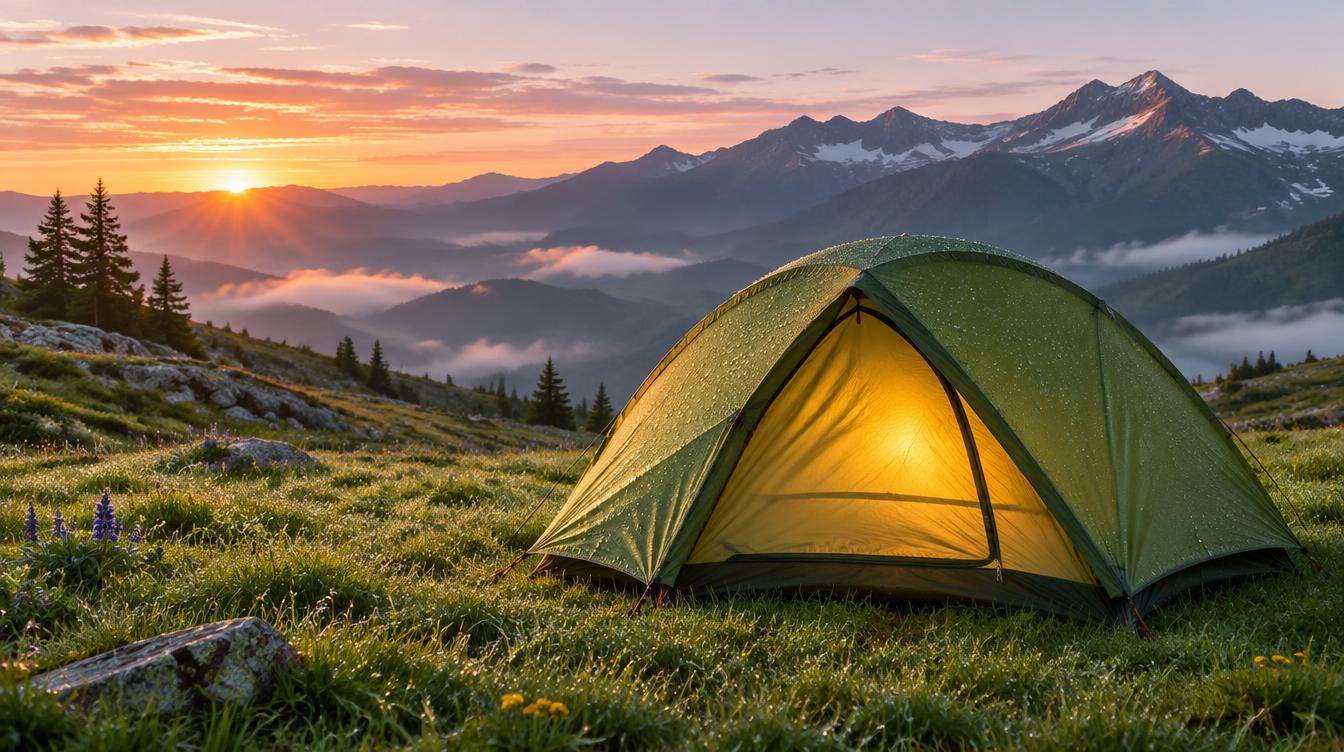
A tent is a simple object asked to do a complicated job. It has to keep rain out and let moisture escape, stand up to wind, pack small and go up in fading light when you are tired and hungry.
For most people, in most places, a three-season tent does all of that. Choosing a good one is mainly a matter of ignoring the marketing and looking at a handful of details.
What three-season means
A three-season tent is designed for spring, summer and autumn. It balances ventilation with weather protection and will handle heavy rain and moderate wind.
It is not built for heavy snow loads or winter storms. Four-season tents use stronger poles and less mesh, which makes them warmer, heavier and stuffier in summer.
Capacity ratings are optimistic
A two-person tent fits two sleeping mats side by side with almost nothing left over. The rating describes how many people can lie down, not how many can live comfortably.
For car camping, where weight does not matter, choose a tent rated for one or two more people than will sleep in it. For backpacking, where every ounce counts, most pairs accept the squeeze.
Buy the tent for the number of people plus their bags, not the number on the label.
Look at the shape, not just the area
Floor area tells you how much ground you cover. Peak height and wall angle tell you how the space feels.
Steep walls give you usable room right to the edges. Low, sloping walls look roomy on paper and leave you brushing against wet fabric. If you can, sit up inside the tent before you buy.
Double wall or single wall
Most three-season tents are double wall: a breathable inner tent, largely mesh, with a separate waterproof flysheet over it. Moisture from your breath passes through the inner and condenses on the fly, away from you.
Single-wall tents combine both layers to save weight. They are lighter and more prone to condensation, and they suit experienced campers in dry climates.
The features worth having
A few details make daily life in a tent noticeably better.
- Two doors, so nobody climbs over anyone at night.
- Vestibules, the covered porch areas for boots and wet gear.
- A full-coverage flysheet that reaches close to the ground.
- Adjustable vents to reduce condensation.
- Interior pockets and a loop for hanging a light.
Colour-coded poles and clips seem like a small thing until you are pitching in the rain.
Weight and packed size
How much weight matters depends entirely on how the tent travels.
| Use | Typical weight for two people | Priority |
|---|---|---|
| Car camping | 6 to 12 lb | Space and comfort |
| Backpacking | 3 to 5 lb | Balance of weight and durability |
| Ultralight | Under 3 lb | Weight above all |
Lighter tents use thinner fabrics and poles. They are wonderful to carry and need more careful handling.
Understanding waterproof ratings
Waterproofness is given as a figure in millimetres, describing how tall a column of water the fabric can hold back. For a flysheet, somewhere from 1,200 to 3,000 millimetres is typical. Floors are usually rated higher.
In practice, the taped seams and the design matter as much as the number. A well-cut fly that sheds water and keeps it away from the inner will outperform a higher-rated tent with poor coverage.
Poles and fabric
Aluminium poles are lighter and stronger than fibreglass and bend under stress rather than splintering. They are worth paying for.
Fabric thickness is described in denier. Higher numbers are heavier and more durable. Family tents use thick fabrics, and ultralight tents use very thin ones.
Freestanding or not
A freestanding tent holds its shape without pegs, so you can pick it up and move it, or pitch it on rock or a wooden platform. Most dome tents work this way.
Non-freestanding tents rely on pegs and tension. They are lighter and need ground that takes a peg and a little practice to pitch well.
The footprint question
A footprint is a groundsheet cut to the shape of the tent floor. It protects the floor from abrasion and adds a barrier against damp.
Make sure it does not extend beyond the edge of the flysheet. If it does, it will catch the rain and funnel it underneath you.
Looking after it
The fastest way to ruin a tent is to store it wet. Mildew damages coatings and smells permanently. Dry it fully at home after every trip, even if that means draping it over furniture.
Long exposure to strong sunlight weakens the fabric over time. Pitch in shade where you can, and take the tent down when the trip is over rather than leaving it up for weeks.
The one-tent answer
For most campers, the right choice is a double-wall, freestanding tent with aluminium poles, two doors and two vestibules, rated for one person more than will use it.
It will not be the lightest or the cheapest. It will be the one you are still happily using in ten years.